Smooth Rain Ride

Liam Reilly
| 29-04-2026
 · Automobile team
The rain doesn't usually announce itself. One moment the road is dry, the next there's a darker patch ahead and a faint mist on your visor.
Rain riding isn't about being fearless or tense. It's about adjusting how you think, move, and read the road so everything stays smooth instead of rushed.
Slow Down Without Feeling Slow
Wet roads reduce traction, but panic braking causes more trouble than the rain itself.
• Ease your pace early. Rolling off the throttle slightly gives tires more grip and buys thinking time.
• Increase following distance. Water adds delay to every response.
• Keep movements smooth. Sudden inputs overwhelm available traction.
Actionable example: When rain starts, reduce your speed by a small, steady amount instead of braking sharply. That calm adjustment creates less stress and keeps the bike settled.
Choose the Cleanest Part of the Lane
Not all wet pavement offers the same grip. Some areas are slicker than they look.
• Ride where car tires usually track. These paths tend to have less buildup.
• Avoid painted markings, metal covers, and glossy surfaces.
• Adjust position through corners to stay on consistent pavement.
Actionable example: At intersections, shift slightly away from the center where vehicles stop. That small move can noticeably improve traction.
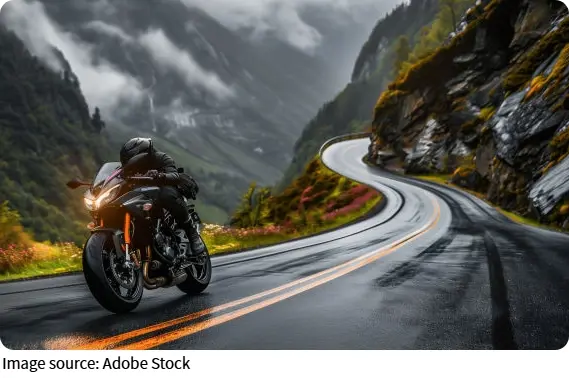
Brake Earlier and More Gently
Braking technique matters more in the rain than raw stopping power.
• Apply brakes progressively, not all at once.
• Use both brakes smoothly to balance the bike.
• Finish most braking before entering turns.
Actionable example: Practice gentle braking in a quiet area during light rain. Feeling how the bike responds builds trust and leads to better focus when traffic is around.
Be Deliberate With Throttle Control
Power delivery affects grip just as much as braking.
• Roll on the throttle gradually when exiting corners.
• Avoid abrupt acceleration on wet surfaces.
• Keep engine speed steady through turns.
Actionable example: As you exit a curve, imagine turning the volume up slowly rather than flipping a switch. That mindset keeps rear traction predictable.
Improve Visibility for You and Others
Rain limits what you can see and how well others see you.
• Clean your visor before rain starts if possible.
• Use lights consistently so you're more noticeable.
• Watch vehicle movement instead of relying only on signals.
Actionable example: Focus on the direction of car wheels rather than just brake lights. Wheels often reveal intent earlier, helping you react sooner.
Read the Road Surface Constantly
Rain exaggerates small changes in texture and slope.
• Watch for pooled water in dips or ruts.
• Cross puddles upright and steady.
• Avoid leaning hard on unfamiliar surfaces.
Actionable example: If you see standing water ahead, slow slightly and keep the bike upright as you pass through. Stability matters more than speed.
Stay Relaxed in Your Body
Tension reduces control and feedback from the bike.
• Keep a light grip on the bars.
• Let the bike move naturally under you.
• Breathe steadily to avoid stiffening up.
Actionable example: Drop your shoulders and loosen your fingers every few minutes. That simple check helps maintain better focus and smoother inputs.
Plan Your Ride With Weather in Mind
Rain riding starts before you turn the key.
• Wear waterproof gear that doesn't restrict movement.
• Allow extra time so you're not rushing.
• Accept that the ride will feel different.
Actionable example: If rain is expected, plan shorter daily distances. Finishing relaxed instead of drained leads to deeper sleep and better riding the next day.
Know When to Pause
Sometimes the smartest move is a short break.
• Heavy rain reduces visibility too much.
• Fogging that won't clear needs attention.
• Fatigue builds faster in poor conditions.
Actionable example: If visibility drops sharply, pull over somewhere safe and wait a few minutes. Let conditions improve instead of forcing progress.
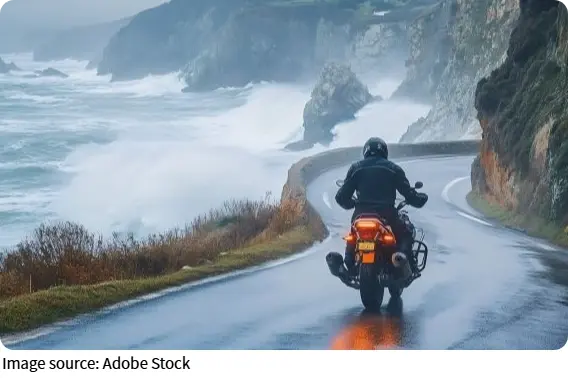
Rain doesn't have to turn a ride into a struggle. With the right mindset, it becomes a quieter, more deliberate experience. Smooth inputs, clear vision, and calm decisions keep you in control. Ride with patience, trust the process, and you'll find that even wet roads can feel manageable when you respect them.