Car Maintenance by Mileage

Samir
| 06-11-2026
 · Automobile team
Some drivers treat car maintenance as one big annual event, one appointment that covers everything.
Your car doesn't work that way. Different parts wear out at very different rates, and the smartest approach is to match each service to the mileage you've actually driven, not to a single calendar date.

Start with the oil change rhythm
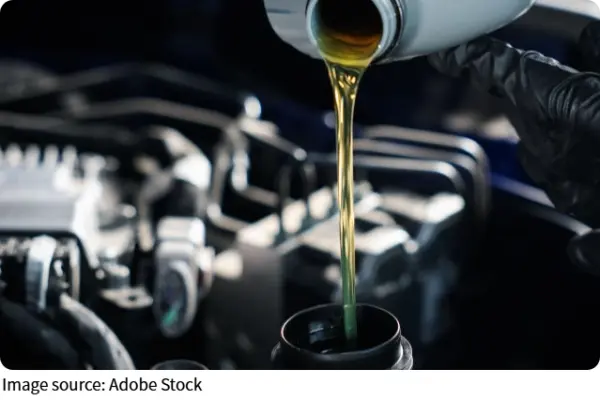
The engine oil change is the service most people track, and it sets the baseline for everything else. Conventional oil typically calls for a change every 5,000 miles, while full synthetic often stretches to 7,500 or even 10,000 miles depending on the manufacturer.
Your owner's manual outranks any quick-oil-change sticker, so check it first. If you do a lot of short city trips where the engine never fully warms up, shorten that interval, since highway miles are gentler on oil than stop-and-go driving. AAA's beginner maintenance guide also recommends checking the other fluid levels at each oil change.
Filters keep the basics clean
Alongside every oil change, the oil filter gets replaced too. The engine air filter usually lasts longer, roughly 15,000 to 30,000 miles, and a dusty climate shortens that fast.
The cabin air filter, the one that keeps your vents from smelling like a wet dog, typically runs about 15,000 to 25,000 miles. The fuel filter on most modern cars is a long-life item, often good for 30,000 miles or more. These are cheap parts, so skipping them saves very little and only delays the job.
Monthly and seasonal checks
Some jobs follow the calendar rather than the odometer. The same AAA guide suggests checking tire pressure once a month, after the car has been parked for at least three hours. Tread depth deserves a monthly look too, and the guide suggests replacing tires at 4/32 of an inch rather than waiting for the legal minimum.
The guide also pairs a tire rotation with a brake inspection every 6,000 to 8,000 miles. Wiper blades and exterior lights deserve a check every two to three months, while the battery and coolant are worth inspecting every six months. Most of these checks take only a few minutes at home.
The 30,000-mile checkpoint
Around 30,000 miles, a cluster of items comes due. Spark plugs on many cars get replaced somewhere between 30,000 and 100,000 miles, depending on whether they're copper, platinum, or iridium.
Brake fluid absorbs moisture over time and is commonly flushed every two to three years or about 30,000 miles. Transmission fluid varies widely by model, so check the manual before assuming it's sealed for life. That assumption has cost plenty of drivers a rebuilt gearbox.
Bigger parts, bigger intervals
Timing belts are the one item you never take risks on. Many manufacturers call for replacement around 60,000 to 100,000 miles, and a snapped belt on an interference engine, where the valves and pistons share the same space, can mean bent valves and a four-figure repair bill.
Coolant typically gets flushed around 30,000 to 50,000 miles on older formulas and up to 100,000 on long-life types. Brake pads depend on your driving, but a set often lasts 30,000 to 70,000 miles. Have them checked at every oil change and you'll catch wear before the rotor gets scored.
Read the manual, then read your driving
The owner's manual gives you the schedule, but your habits adjust it. Lots of idling, heavy loads, mountain grades, and extreme cold all push you toward the shorter interval. A driver racking up smooth highway miles can often follow the longer one.
Keep a simple log of dates and mileage, and you'll never stand at the service desk guessing what was done last time.
Look up your car's intervals in the owner's manual and note the mileage at which each item is next due. Between visits, check tire pressure, wiper blades and fluid levels yourself, and book bigger jobs like the timing belt before they come due.