Why Engine Placement Matters

Nora
| 03-11-2026
 · Automobile team
Two sports cars can share the same horsepower figure and still feel nothing alike the moment you turn the wheel.
The difference usually isn't the engine itself. It's where the engine sits, and how that weight shifts the way the car launches, turns, and stops.
Below, we look at the three main layouts and what each one means for acceleration, cornering, and everyday ownership, from forgiving front-engine cars to demanding rear-engine ones.
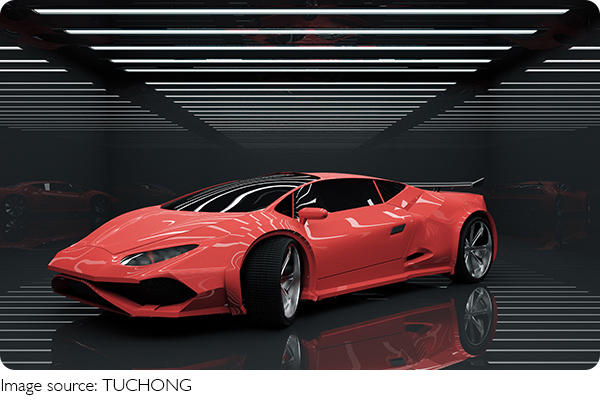
Front engine, rear drive basics
Front-engine, rear-wheel-drive is the classic layout, and for good reason. The engine sits ahead of the cabin, driving the rear wheels through a shaft. Cars like the Mazda MX-5 Miata and the Ford Mustang use this setup. You get a roomier cabin, easier servicing, and predictable weight transfer under braking.
The catch is that a heavy engine up front pushes the center of mass forward, so the car tends to understeer when you drive hard into a corner. Weight distribution usually lands around 55/45 front to rear, which you feel as a nose that wants to keep going straight.
Mid engine, the balance trade
Mid-engine cars place the engine between the axles, behind the driver. The Porsche 718 Cayman and Chevrolet Corvette (since the C8) are the clearest examples. Moving that mass toward the center drops the polar moment of inertia, the car's resistance to rotating, so it turns in more readily.
Acceleration improves too, because more of the weight already sits over the driven rear tires. The cost is packaging. Cabin space shrinks, cooling gets trickier, and the rear end can snap into oversteer, with the tail sliding wide, faster than in a front-engine car if you lift off mid-corner.
Rear engine, the odd one out
Rear-engine layouts put the engine behind the rear axle, and among sports cars almost nobody does this anymore except the Porsche 911. That position hangs weight out back, which helps traction off the line and gives strong braking stability.
It also makes the front end light, so the 911 has always demanded a specific driving style: brake in a straight line, then commit to the turn. Porsche has spent decades tuning suspension and electronics to tame the pendulum effect, the heavy tail's urge to swing wide, and the layout still rewards a driver who respects it.
Acceleration differs by layout
Where the weight sits during a launch matters as much as raw power. A rear-engine 911 Turbo hooks up harder off the line than most front-engine rivals with similar output because the engine mass presses down on the driven wheels. Mid-engine cars split the difference, keeping enough weight on the rear tires without the extreme tail bias.
Front-engine cars carry less weight over the driven rear wheels to begin with, which is why drag racers often add ballast over the rear axle or use rear-biased setups.
Handling and the weight question
In corners, the layout decides how the car talks to you. Mid-engine cars feel eager and neutral, with the mass rotating around your hips. Front-engine cars feel planted but heavier at the nose, so you learn to trail-brake, easing off the brakes as you turn in, to rotate them.
Rear-engine cars feel light up front and grippy at the back, and that combination takes practice. None of these is objectively better. A well-sorted Miata can embarrass a poorly driven supercar on a tight track.
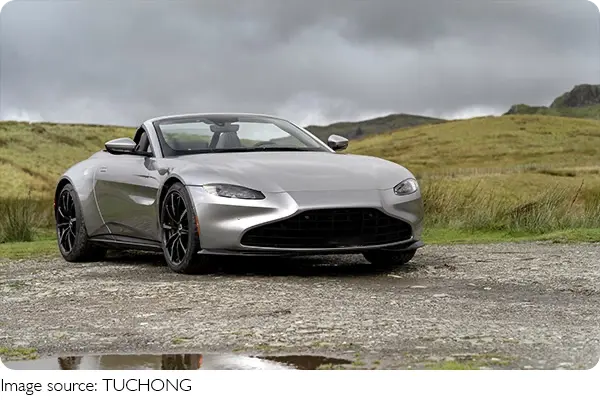
If you're shopping, drive all three layouts before you decide. A front-engine car is forgiving and cheap to own, a mid-engine car rewards precision, and a rear-engine car asks for respect and gives back traction. Next time you slide into a driver's seat, notice where the engine sits before you touch the throttle, and the car's behavior will make sense.