Why SUVs Sip More Fuel

Tessa
| 03-11-2026
 · Automobile team
Two cars can leave the lot with the identical 2.0-liter engine and still post very different fuel numbers, and the taller one almost always loses.
That gap isn't bad engineering. It's physics doing its job, and once you see where the fuel goes, the numbers stop feeling random.
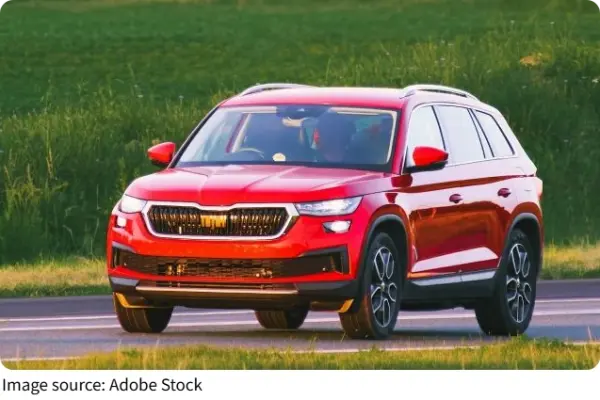
Weight is the first tax
A mid-size SUV typically carries 300 to 500 pounds more than a sedan on the same platform. Every one of those pounds has to be accelerated from a stop and hauled up every hill. Take the Honda CR-V against the Civic: both use a 1.5-liter turbo four, but the CR-V weighs roughly 300 pounds more, and its EPA combined figure sits a few mpg below the Civic's. You feel it most in city driving, where you're constantly asking the engine to overcome that mass.
The shape pushes back
A sedan slices through air with a low nose and a roofline that tapers into the trunk. An SUV stands tall, with a blunt front end and a big flat rear that traps air behind it. Drag rises with the square of speed, so that boxy profile costs you most on the highway. A Toyota RAV4 and a Camry share a brand and a driving mission, yet the RAV4's taller body and larger frontal area mean it works harder to hold 70 mph. At 40 mph, you barely notice. At 75, you do.
Bigger tires, more drag
SUVs roll on wider, heavier tires with more aggressive tread, and both features add rolling resistance. A typical sedan tire might be a 215-width all-season; an SUV often runs a 235 or 245. More rubber on the road means more friction to fight, and the knobby tread patterns on some models add a little more. Swap to a low-rolling-resistance tire, and you can claw back a small slice of that, but the wide stance is baked into the design.
Aerodynamics you can't fix
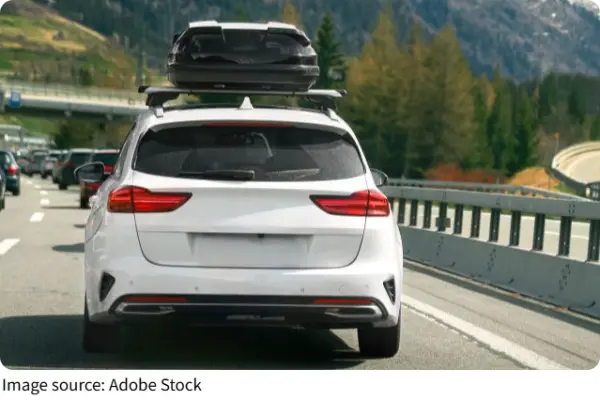
You can't lower the roof or shrink the frontal area without giving up the cargo space that made you buy the thing. What you can do is drive with the shape in mind. Keep highway speeds moderate, since drag climbs fast above 60 mph. Skip the roof rack when it's empty, because a bare crossbar setup adds real drag at speed. And check tire pressure monthly; a few psi low on a heavy vehicle costs more than most people expect.
The math is simple once you lay it out: extra mass to move, a taller face to push through the air, and more rubber meeting the road. None of it is a flaw. It's the trade you make for space and ride height. Next time you're comparing two window stickers, look past the engine size and check the curb weight and the drag numbers. That's where the real story lives.