Big Outside, Tight Inside

Arjun
| 03-11-2026
 · Automobile team
You see a boxy SUV parked at the curb, all tall roof and wide shoulders, and you assume the cabin must be enormous.
Then you climb in and your knees are up near the dash, the third row is basically a shelf, and you wonder where all that bulk went. It's a real thing, and it happens for reasons you can actually trace. Here is where the space goes, and what to check before you buy.

Height is not the same as room
Height mostly buys you ground clearance and a tall seating position, not usable cabin volume. A Ford Bronco Sport sits high on its suspension, but a chunk of that vertical space is eaten by the ride height and the chunky wheel arches poking into the footwells.
You get the commanding view, sure. You don't automatically get stretch-out space for your legs.
Thick skins cost you inches
Modern SUVs carry a lot of structure between you and the outside world. High-strength steel pillars, side airbag channels, door beams, and sound deadening all stack up. Compare a slab-sided old-school truck with a current model and the door panels on the new one are noticeably fatter.
Those extra centimeters come straight out of hip and shoulder room. A Toyota Land Cruiser feels narrower inside than its exterior width suggests for exactly this reason.
Packaging choices hide the waste
Some of that exterior size goes into the hood, not the cabin. Long noses for engine bays and crash structure push the windshield back and shrink what's left for people.
A Jeep Grand Cherokee has a fairly long stretch between the windshield and the front wheels, and the result is a cabin that doesn't feel as roomy as the footprint promises. Push the wheels to the corners and shorten the overhangs, the body hanging past each axle, and the same exterior size yields far more interior.
High floors raise your knees
What sits under the floor matters too. All-wheel-drive hardware, the exhaust, and the fuel tank all need room beneath the cabin, and in hybrid and electric SUVs a battery pack often joins them. Raise the floor and the gap between it and the seat cushion shrinks.
That is why rear passengers in some SUVs sit with their knees high and their thighs barely touching the cushion. The vehicle is tall, but the people inside are perched rather than properly seated.
Sloping roofs trim headroom
Styling takes its share as well. Many newer SUVs use a coupe-like roofline that drops toward the tailgate to look sleeker. From the outside the vehicle still looks tall, but rear headroom and the height of the cargo opening both shrink, so tall passengers and bulky items feel the squeeze first.
Third rows eat the second
If a model offers a third row, the manufacturer usually slides the second row forward to make it fit. That's the trade. A midsize SUV with three rows often gives front passengers decent space and then squeezes everyone behind them.
Fold that third row flat and you get cargo room back, but the legroom up front and in the middle doesn't change, because the seat geometry was set at the factory.
Check the numbers that matter
Ignore the marketing photos and look at shoulder room, hip room, and second-row legroom in the specs. Then sit in the actual car with the seat where you'd drive it, and bring whoever rides with you.
Reach behind your driving position and feel the gap. A spec sheet listing 39 inches of rear legroom means little if the front seat is pushed all the way back.
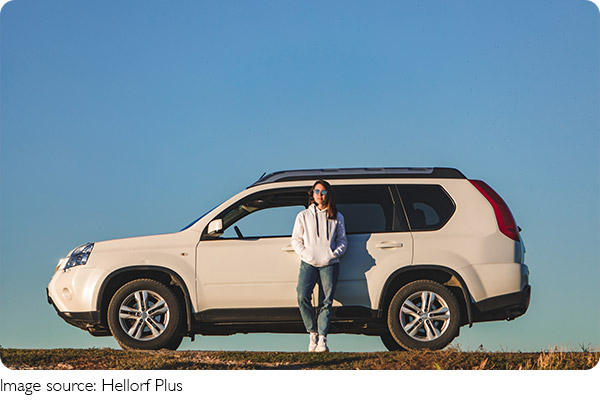
The size on the outside is often about presence, styling, and crash structure, not about giving you more room to sprawl. When shopping, line up two or three models and compare their interior figures side by side, since a smaller SUV with short overhangs can beat a bigger one inside.