Why Supercar Doors Go Up

Pankaj Singh
| 02-11-2026
 · Automobile team
Most car doors swing out on a hinge you never think about. Supercar doors do something else entirely, and it's not only for the drama.
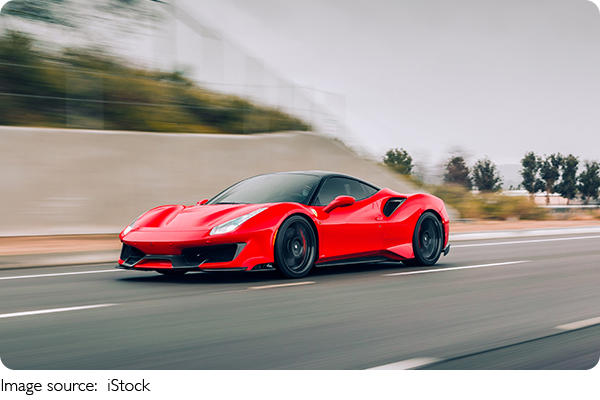
Watch a Lamborghini Aventador's scissor doors rise straight up, or a McLaren 720S's dihedral doors sweep forward with the roof panel, and you're seeing solutions to problems that ordinary doors can't handle. Here is what those hinges actually solve, and what they cost.
Where the idea started
Scissor doors reached production on the Lamborghini Countach in 1974, the first production car to use them. Designer Marcello Gandini, then at Bertone, was working with a body so low, wedge-shaped and wide that conventional doors had little room to open.
The Countach was also hard to see out of, especially to the rear. With the door raised, drivers could sit on the sill and look back over the car while reversing. The Diablo and Murciélago, both V12 flagships, kept the design going.
Parking is tighter than you think
Supercars sit low and wide, often under 45 inches tall, with long doors. A conventional door on a car that size needs a wide arc to open, which is a problem in a cramped garage or a tight parking bay.
Scissor doors hinge at the front of the door and rotate upward, so much of their movement happens above the car and it needs barely any side clearance. You can slide out with maybe a foot of space beside you. Owners say this helps most when another car is parked close alongside.
Lightness drives the hinge choice
Door mechanisms on a supercar have to stay light, because every kilo counts against the power-to-weight ratio. A well-designed scissor hinge is a compact set of gas struts and pivots, not a bulky frame.
The Aventador's doors are famously thin and light, partly because the hinge geometry lets the structure stay simple. On a car chasing 700 horsepower, saving a few pounds at each door is worth the extra engineering and assembly work.
The showroom effect is real
Here's the part people don't say out loud. A car with upward doors turns heads in a way a normal one never will. Ferrari's LaFerrari used butterfly doors that pivot forward and up, and the effect at a car show is immediate.
Buyers spending six figures want a car that announces itself before the engine even starts. Heritage matters too: on Lamborghini's flagships, the doors link each new model, such as the Revuelto plug-in hybrid, back to the Countach. The mechanism is engineering, but the marketing value is undeniable.
Not every supercar buys in
Plenty of fast cars stick with normal doors. Porsche's 911 Turbo S has conventional hinges and still hits 60 mph in under three seconds. Even Lamborghini fits ordinary doors to the Huracán, its successor the Temerario, and the Urus SUV.
The reason is simple: those doors work fine, and the extra cost and weight of a special hinge don't pay off. The upward door is a choice, not a requirement, and the best designers know when to skip it.
Servicing keeps you humble
That clever hinge has a downside. Gas struts weaken over time, and a door that won't stay up is a genuine headache. Replacement struts on a Lamborghini can run into the hundreds of dollars each, and the alignment has to be right or the door won't seal.
Daily use has its own quirks. Upward doors need care in a low garage, and owners say the low seating position is a bigger challenge than the doors, especially for taller drivers. If you ever own one, budget for the mechanism, not just the badge.
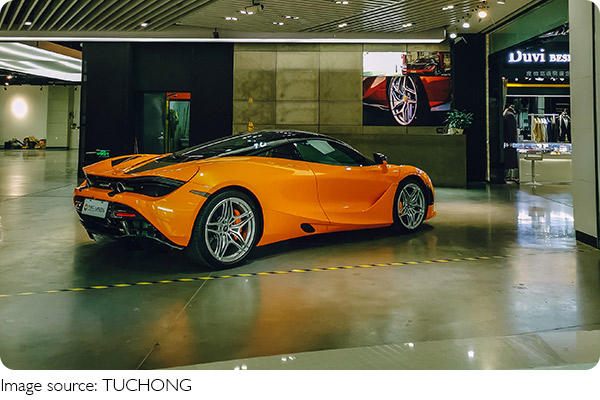
Before buying a car with upward doors, measure your garage ceiling as well as its width, since the doors save space at the side but need room above. After that, have the gas struts checked at every service so the doors keep lifting and sealing properly.