Engine Layout Explained

Hiro
| 02-11-2026
 · Automobile team
A car's performance depends on much more than its engine power.
The position of the engine also plays a fundamental role in determining how the vehicle accelerates, responds to steering inputs, and maintains stability through corners.
By arranging the engine in different positions, automotive engineers can create distinct driving characteristics while meeting different design and performance objectives.
Front-Engine Design: Versatility and Practicality
Front-engine configurations place the engine ahead of the passenger compartment and are widely used across modern passenger vehicles. This arrangement offers considerable flexibility in cabin design, drivetrain selection, and mechanical packaging.
Depending on the drivetrain, power can reach the front wheels, rear wheels, or all four wheels. In front-wheel-drive vehicles, the engine's weight over the driven axle can support traction during acceleration. Rear-wheel-drive configurations distribute driving and steering responsibilities between separate axles, offering engineers additional opportunities to refine handling characteristics.
The layout is particularly adaptable, making it suitable for sedans, hatchbacks, coupes, and many performance vehicles.
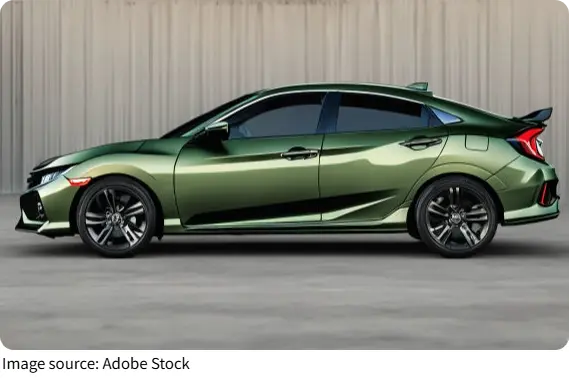
Mid-Engine Design: Responsive Handling
Mid-engine configurations position the engine between the front and rear axles, generally behind the passenger compartment. This arrangement concentrates substantial mechanical mass within the wheelbase, helping reduce the vehicle's polar moment of inertia.
Polar moment of inertia describes how strongly a vehicle resists rotational movement around its vertical axis. A lower value generally allows the car to change direction more readily, contributing to responsive steering and precise cornering.
This configuration is especially popular in performance-focused vehicles. However, its compact packaging requires careful coordination of passenger space, cooling systems, transmission components, and suspension geometry.
Rear-Engine Design: Rear-Axle Traction
Rear-engine configurations position the engine behind the rear axle, creating a distinctive rear-weighted design. The additional load over the rear wheels can provide strong traction during acceleration, particularly when those wheels deliver power.
This arrangement also influences braking and cornering behavior because the distribution of mass affects how the vehicle responds to changes in speed and direction. Engineers account for these characteristics through suspension geometry, tire selection, chassis development, and electronic stability systems.
The result is a distinctive engineering configuration with its own approach to vehicle dynamics and mechanical packaging.
Weight Distribution and Vehicle Balance
Weight distribution describes how a vehicle's mass is shared between its front and rear axles. Engine position has a major influence on this balance, although the transmission, battery, fuel system, and other components also contribute.
Front-engine vehicles often carry a greater proportion of their weight over the front axle. Mid-engine designs can position major components closer to the center of the chassis, while rear-engine configurations typically place more static weight toward the rear.
These differences influence acceleration, braking, steering response, and cornering. However, an effective weight distribution depends on the vehicle's intended purpose rather than a universal ideal.
Suspension and Tire Engineering
Engine placement establishes an important foundation, but suspension and tire design determine how effectively a vehicle uses its available grip.
Suspension geometry controls wheel movement and helps maintain consistent tire contact with the road. Spring rates and anti-roll components influence body movement during cornering, while tire construction and dimensions affect traction, steering precision, and braking performance.
Electronic stability and traction systems provide additional control by adjusting braking or engine output when necessary. Together, these technologies help engineers develop predictable and well-coordinated driving characteristics.

Why Engine Placement Matters
Front-, mid-, and rear-engine configurations represent three distinct approaches to automotive engineering. Front-engine designs offer versatility and practical packaging, mid-engine arrangements emphasize centralized mass and responsive handling, while rear-engine layouts make effective use of rear-axle loading.
The best configuration depends on the vehicle's intended role, drivetrain, chassis design, and performance objectives. Ultimately, engine placement is not simply a matter of where the powertrain fits. It is a fundamental engineering decision that shapes how a car behaves, responds, and performs on the road.