Off-Road Riding Skills

Nolan O'Connor
| 24-10-2026
 · Automobile team
Off-road motorcycle riding requires balance, precise control, and the ability to adapt to changing terrain.
From navigating uneven trails to climbing steep slopes, developing the right techniques can improve stability and make each ride more rewarding.
With consistent practice, proper preparation, and a gradual approach to learning, riders can strengthen their skills and handle a wider range of conditions with confidence.
Master the Right Riding Position
Body position plays an essential role in balance and control. On relatively smooth trails, sitting can help conserve energy. When the surface becomes uneven, standing slightly above the seat allows the legs to absorb bumps while the motorcycle moves beneath the rider.
Keep your knees bent, arms relaxed, and feet securely positioned on the footrests. Maintain a comfortable grip on the handlebars to allow smooth steering adjustments. Before entering challenging terrain, practice transitioning between sitting and standing at low speed in a clear, level area.
Improve Weight Distribution
Adjusting body position helps maintain stability across changing terrain. Shifting weight forward, backward, or sideways can support balance and traction when approaching slopes, turns, and uneven surfaces. The appropriate position depends on the gradient, available grip, and motorcycle design.
When standing, keep your knees flexible and your upper body relaxed. Allow your legs to absorb movement rather than remaining rigid. On small bumps, make gradual adjustments to maintain a centered stance and respond naturally to changes in the ground.

Navigate Uphill and Downhill Sections
Before approaching a hill, assess its gradient, surface, visibility, and available space. Select a suitable gear before beginning the climb, then apply smooth throttle control to maintain appropriate momentum. Moving your upper body forward can help keep the front wheel grounded, while balanced weight distribution supports rear-wheel traction.
For descents, adjust your speed before reaching the slope and apply the brakes progressively. Use the front and rear brakes according to the motorcycle's design, surface conditions, and your training. Position your body to maintain balance and steering control, adapting to the steepness of the descent.
Choose a route that matches your experience and the motorcycle's capabilities. Assessing the terrain before committing to a climb or descent helps you make informed decisions and maintain control.
Maintain Control on Rough Trails
Uneven ground requires flexible body positioning and smooth control inputs. Keep your knees and elbows slightly bent, relax your shoulders, and look ahead to anticipate changes in the trail. This approach gives you more time to respond to obstacles and adjust your line.
Smooth throttle and clutch operation, where applicable, can help maintain consistent movement across changing surfaces. Watch for rocks, loose gravel, deep ruts, and tight turns. Adjust your speed before reaching these sections, and allow the suspension and your legs to work together as you cross uneven ground.
Approach Jumps With Care
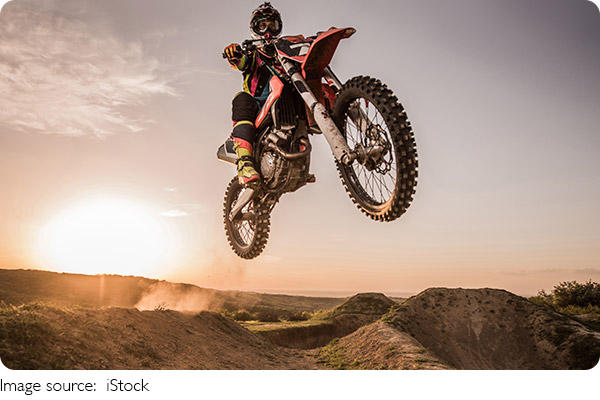
Jumping requires advanced skills, suitable protective equipment, and a designated practice area. Beginners should first develop reliable balance, steering, and speed control before progressing to airborne maneuvers.
Under qualified supervision, riders can learn how takeoff speed, body position, suspension response, and landing conditions affect stability. Applying more throttle or making forceful handlebar movements does not guarantee a controlled landing. Progress gradually and practice techniques appropriate to the terrain and motorcycle.
Develop Obstacle-Crossing Skills
Experienced riders may use specialized techniques to cross certain obstacles, including small logs. These maneuvers require coordination between body position, throttle, clutch, and braking.
Front-wheel lifts and rear-wheel lifts demand additional practice and precise control. Learn these skills under qualified instruction in a controlled area with suitable equipment and sufficient space. Building a strong foundation in balance and obstacle assessment provides a better starting point for advanced techniques.
Prepare Before Every Ride
Thorough preparation supports a more controlled and comfortable riding experience. Before setting off, inspect the tires, brakes, chain, throttle, and controls according to the manufacturer's maintenance instructions. Wear a properly fitted helmet, suitable eye protection, gloves, sturdy boots, and protective riding clothing.
Check the weather and trail conditions, carry sufficient water, and bring a charged phone. Share your planned route and expected return time with someone, particularly when exploring unfamiliar areas. Riding with a companion can provide additional support, while choosing a route suited to your experience helps you progress at a manageable pace.
Final Thoughts
Off-road motorcycle riding combines balance, coordination, terrain awareness, and thoughtful preparation. Mastering the fundamentals before attempting advanced maneuvers helps riders develop confidence and respond more effectively to changing conditions.
Focus on one skill at a time, practice consistently, and assess each trail before proceeding. With a measured approach and suitable instruction, every outing can become an opportunity to improve technique and enjoy the experience with greater control.
Which skill would you most like to improve first: balancing on uneven ground, navigating hills, or crossing obstacles? Choose a starting point and build your abilities through regular, structured practice.