Pickup Truck Towing Guide

Ravish Kumar
| 21-10-2026
 · Automobile team
Towing a trailer requires careful preparation and a different approach to everyday driving.
Additional length and weight influence steering, braking, visibility, and maneuverability.
Understanding these differences helps drivers maintain control, make informed decisions, and handle a wider range of driving situations with confidence.
Prepare Your Pickup and Trailer
A successful towing journey begins with checking the vehicle, trailer, and towing equipment before departure.
Confirm Weight Limits
Check the pickup's towing capacity and applicable weight ratings for its specific configuration. Engine type, drivetrain, cab design, and installed equipment can affect the permitted limits.
Verify the trailer's fully loaded weight, hitch rating, vehicle load capacity, axle ratings, and maximum combined weight where applicable. Include passengers, luggage, accessories, and trailer tongue weight in the relevant calculations. The complete setup must remain within every applicable rating.
Connect the Trailer Securely
Align the pickup with the trailer and position the coupler correctly over the hitch ball or designated connection. Lock the coupler according to the equipment instructions, attach the required safety chains or secondary connections, and connect the electrical plug.
Raise and secure the trailer jack and any other support equipment intended for travel. Ensure safety chains have sufficient slack for turning while remaining clear of the road. Secure all cargo and confirm that the electrical cable has enough clearance for movement.
Check Lights and Mirrors
Test the turn signals, brake lights, running lights, and other required lighting before setting off. Confirm that each light responds correctly and that the electrical connection remains secure.
Adjust the mirrors to provide a clear view along both sides of the trailer and the surrounding traffic. If the standard mirrors do not provide adequate visibility, use suitable towing mirrors where required.

Drive with Greater Control
A trailer changes how a pickup responds to steering and braking. Allow additional space for maneuvers, anticipate traffic conditions, and use smooth, deliberate inputs.
Navigate Turns Carefully
The trailer wheels generally follow a tighter path than the pickup's rear wheels when turning. Allow sufficient clearance around corners, curbs, parked vehicles, and other obstacles.
Before entering a turn, reduce speed and assess the available space. Practice in an open area using soft markers to understand how the trailer tracks behind the pickup. Gradually improve your technique in both directions before tackling more demanding routes.
Maintain a Suitable Following Distance
The extra weight of a trailer can increase stopping distance. Leave ample space ahead, watch traffic conditions, and brake progressively to maintain a smooth, controlled pace.
If the trailer has an integrated braking system, confirm that it operates correctly and that any brake controller is configured according to the equipment instructions. Become familiar with the controls before entering busy traffic.
Reverse with Precision
Reversing requires patience because the trailer changes direction in response to the pickup's steering movements. Start in a spacious practice area and move at a slow, controlled speed.
Use the mirrors to monitor the trailer's position, making small steering adjustments as needed. If the trailer begins moving away from the intended path, stop and pull forward to realign the vehicle combination before continuing. A spotter can provide additional guidance when visibility or space is limited.
Plan Your Journey
Thoughtful route planning makes towing more convenient and helps you identify suitable places to stop, refuel, and take breaks.
Select Suitable Routes and Stops
Consider road width, turning space, overhead clearances, surface conditions, and any applicable vehicle restrictions when choosing a route. Check unfamiliar stopping places in advance and look for spacious entrances, adequate parking areas, and convenient exits.
Account for the full length and height of the pickup and trailer when assessing access. Planning these details ahead of time helps you navigate each stop with greater ease.
Inspect the Setup Along the Way
After traveling a short distance, stop in a safe location to inspect the hitch connection, safety chains, electrical plug, trailer tires, cargo restraints, and visible securing points.
During longer journeys, repeat these checks at suitable intervals and follow the vehicle and trailer manufacturers' recommendations. Confirm that the tires remain in suitable condition and that the cargo is secure and properly distributed.
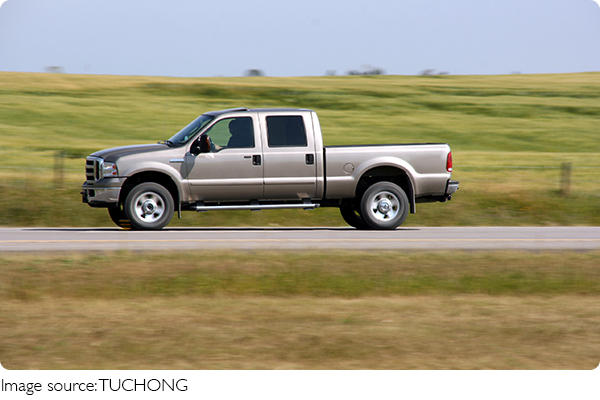
Make Every Towing Trip Smoother
Confident towing comes from preparation, awareness, and consistent technique. Verify the weight ratings, inspect the connections, adjust your mirrors, and practice turning and reversing before taking on unfamiliar routes. Allow extra room for braking and choose stopping places that accommodate the complete vehicle combination.
By combining careful preparation with controlled driving and sensible route planning, you can make pickup truck towing more efficient, predictable, and enjoyable.