When Your Car Breaks Down

Margot
| 21-10-2026
 · Automobile team
Imagine we are driving to work, exploring a new town, or enjoying a family holiday when our car suddenly stops. What should we do first? A breakdown can happen on a city street, a country road, or a motorway.
With a little preparation, we can stay calm, protect our passengers, and arrange suitable help wherever our journeys take us. Here is what to do, step by step.

Stay Calm and Stop Safely
When our vehicle loses power or a warning light appears, we should avoid sudden movements. Switch on the hazard lights and steer gently toward a safe stopping place if possible. On a motorway, an emergency stopping area or suitable roadside shoulder may be the best option.
Once stopped, apply the parking brake and follow the vehicle handbook. Before opening a door, check the surrounding traffic. Choosing a safe position gives us time to assess the problem without creating extra risks.
Check Common Vehicle Problems
Several everyday issues can leave us stranded. First, check the fuel gauge. An empty tank may explain why the engine will not start. If we have run out of fuel, contact a roadside service rather than walking along a busy road.
A weak battery may also prevent the engine from starting. Dim dashboard lights can provide a clue, although other faults may cause similar symptoms. We should only attempt a jump-start if we have compatible equipment and understand the correct procedure.
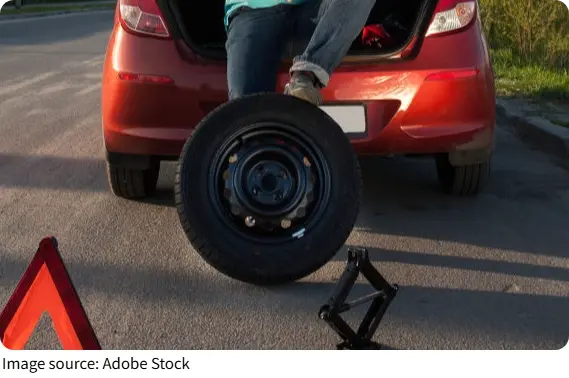
Tyre problems need attention, too. Unusual vibrations, changes in handling, or visible damage may indicate a puncture. Stop driving if a tyre is unsafe. If we are beside moving traffic, arranging professional assistance is generally safer than changing a wheel there.
Strange engine noises, steam, or leaking fluid can signal a serious fault. Switch off the engine when appropriate, keep clear of hot components, and avoid restarting the vehicle if doing so could cause further damage.
Prepare an Emergency Kit
A compact emergency kit can make an unexpected delay easier to manage. A flashlight helps after dark, while a reflective vest improves visibility in low light. Keep a charged mobile phone, charging cable, and power bank ready for communication.
Drinking water and packaged snacks are useful during long waits, especially when travelling with children or older passengers. A first-aid kit, suitable gloves, tyre pressure gauge, and basic tools can also help. Jumper cables or a compatible portable jump starter may be useful if we know how to use them safely.
Keep the vehicle handbook, insurance information, and roadside assistance details somewhere easy to find. Check the kit regularly to make sure essential supplies are ready.
Arrange Professional Assistance
If we cannot identify or safely resolve the problem, contacting a professional service is the sensible next step. Depending on the country and our coverage, help may be available through vehicle insurance, a manufacturer warranty, a motoring association, or an independent roadside provider.
Before calling, prepare the vehicle's make and model, registration number, location, and a short description of the problem. Road signs, route markers, and phone location-sharing features can help the service team find us.
Explain how many passengers are travelling with us and whether anyone needs extra support. If the vehicle creates immediate danger, contact the appropriate local emergency service. Since service numbers and roadside procedures vary between countries, checking local guidance before travelling is useful.
Protect Everyone While Waiting
Our safety remains the priority while help is on the way. If we can leave the vehicle safely and reach a protected place, we should stay away from moving traffic and follow local instructions. Avoid standing directly in front of or behind the vehicle.
If leaving the car would expose us to greater danger, remaining inside with seat belts fastened may be safer. The right choice depends on the road layout, traffic, and surrounding conditions. At night or in poor weather, reflective clothing can help other drivers see us. Explain the situation calmly to passengers.
Prevent Future Breakdowns
After the vehicle has been repaired, review what caused the problem. Regular servicing, checking tyre pressure, monitoring warning lights, and inspecting fluid levels can help us identify developing faults.
Before a long journey, check the fuel level, lights, tyres, and battery condition. Review the route, check weather conditions, and confirm that suitable roadside assistance is available.

Lykkers, a breakdown can happen wherever we travel, and saving the roadside assistance details in our phone before setting off means one less thing to search for at the roadside. Which item would you find most useful during an unexpected roadside stop? Share your ideas and help other travellers prepare for safer journeys.
What To Do When Your CAR Breaks Down On The Highway?
Video by Simply Frugal Life