Mid-Engine Cars Explained

Marcus
| 21-10-2026
 · Automobile team
Hello, let's get started. Most cars put the engine up front, right over the wheels that steer, and that arrangement has worked for about a century.
A mid-engine car does the opposite. It moves the weight to the middle of the car, and that single decision changes how the whole thing behaves.
The weight lands in the middle
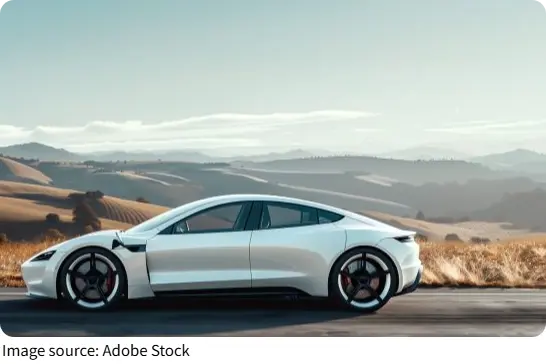
In a mid-engine layout, the engine sits between the front and rear axles, usually just behind the driver. That puts the heaviest part of the car near its center of mass. A Porsche 718 Cayman carries roughly 45 percent of its weight up front and 55 percent at the back, and that near-balance is the whole point. When you turn the wheel, the car rotates around a mass that is close to you, not out at one end. You feel it immediately in quick direction changes.
Grip where the power goes
Drive wheels need weight on them to put power down. In a front-engine rear-wheel-drive car, the rear tires carry the drive load but not much static weight. Move the engine back and the rear axle gets both. That's why a mid-engine car can launch harder and exit corners sooner without spinning a tire. The Toyota MR2 and the Lotus Elise both leaned on this trick for years, and neither had big power. They didn't need it.
The trade-offs you actually live with
Here's the flip side. With the engine behind the seats, there's no room for a proper trunk in the back and often not much in the front either. The Porsche Boxster gives you two small compartments instead of one real one, and you learn to pack light. Cabin space shrinks too. The engine sits close to your shoulders, so noise and heat come with it. And when something breaks, access is tight. A clutch job on many mid-engine cars means dropping the whole engine and transaxle out the bottom, which is why labor bills run higher than on a front-engine equivalent.
Why the layout rewards a careful driver
That rear-biased weight can bite. Lift off the throttle mid-corner and the back end can step out faster than in a front-engine car, because the mass is already back there and inertia keeps it moving. Early MR2 models earned a reputation for exactly this. Modern stability control tames most of it, but the physics haven't changed. Smooth inputs, braking in a straight line, and getting back on power progressively all matter more here. The payoff is a car that feels planted and precise once you're smooth.
Where it shows up in the real world
You'll find this layout in the cars people actually cross-shop. The Chevrolet Corvette switched to mid-engine with the C8, moving from decades of front-engine design. Ferrari builds nearly its whole lineup this way, from the 296 GTB up. McLaren, Lamborghini, and the Porsche 718 family all follow the same recipe. Even the Acura NSX used it. These aren't exotic one-offs. They're the standard shape for cars chasing balance and traction over cargo space.
So the mid-engine layout is a straight trade: you give up practicality and cheap maintenance to get weight in the middle, grip at the drive wheels, and steering that responds the moment you ask. Next time you see one parked, look at where the cabin sits relative to the wheels. That gap tells you everything about how it drives.