What a Rear Wing Really Does

Arvind Singh
| 21-10-2026
 · Automobile team
Hi, let's get started. Most people see a big wing on a car and assume it's there to make the thing look fast.
Fair enough, that's often true on the street. But on a car that actually needs one, the wing is doing a very specific job, and it has almost nothing to do with appearance.
Downforce, not decoration
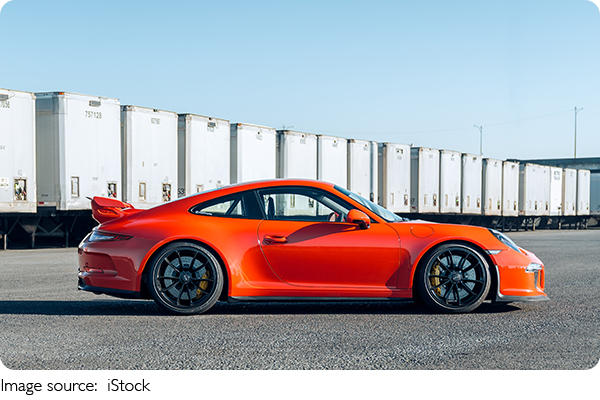
A rear wing works by generating downforce, which is the opposite of lift. As air moves over the wing's curved surface, the shape and angle push the air upward, and the wing gets pushed downward in return. That downward force presses the rear tires into the road. More pressure on the tires means more grip, and more grip means you can carry speed through a corner without the back end stepping out. On a Porsche 911 GT3, the rear wing is a working part of the car's aero package, not a trim piece.
Why the back end needs it most
Here's the part that surprises people. A car's shape naturally generates lift at speed, especially at the rear, because the roofline slopes down and air accelerates over it. That lift makes the rear tires lighter, which is the last thing you want when you're asking them to hold a line. A wing counters that lift. It's why race cars from Formula 1 to Le Mans prototypes run large rear wings while the front gets a smaller splitter. The rear is where the problem is worst.
Angle of attack changes everything
The angle at which the wing sits relative to the airflow is called the angle of attack. Tilt it up more, and you get more downforce, but you also get more drag, which slows you down on straights. Tilt it down, and you lose downforce but gain top speed. Teams adjust this constantly. At a track like Monza, with its long straights, you'll see cars running a flatter wing. At Monaco, where corners dominate, the wing goes steep. It's a trade-off, and there's no single setting that works everywhere.
When a wing actually helps you
Downforce only matters when you're moving fast enough for the air to do its job. Below roughly 60 to 70 mph, the effect is minimal. That's why a wing on a daily-driven car in city traffic is mostly cosmetic. But on a track car at 100 mph through a sweeping turn, that downforce is the difference between a stable exit and a spin. The faster you go, the more the wing earns its place.
Drag is the price you pay
Nothing comes free. Every bit of downforce you add costs you fuel efficiency and top speed. A wing that generates meaningful downforce at highway speeds can cut your gas mileage noticeably. This is why manufacturers tune street-car wings conservatively, or make them active, like the retractable spoiler on a Porsche Panamera that stays flush until you need it. It deploys at speed, then tucks away when you slow down.
Wing versus spoiler
People use the words interchangeably, but they're different parts. A spoiler is a smaller lip that disrupts airflow to reduce lift. A wing is a separate airfoil mounted on stanchions above the body, generating downforce through its own shape. A Subaru WRX STI has a wing. A subtle trunk lip on a sedan is a spoiler. Both manage airflow, but a wing does it more aggressively.
So the next time you spot a big wing on the road, you'll know it's either doing real aerodynamic work or just dressing up the car. If you're considering one for your own vehicle, ask yourself where you actually drive. On a track, it can transform your cornering. In stop-and-go traffic, you're paying for drag and not much else. Match the part to the purpose, and you'll get the most out of it.