How EVs Change Design

Mukesh Kumar
| 27-07-2026
 · Automobile team
Hi, Readers! Electric cars are doing more than changing what powers a vehicle.
They are quietly reshaping how vehicles are designed from the ground up. Because they use battery packs and electric motors instead of traditional engine layouts, designers have a lot more freedom to rethink space, comfort, performance, and even the overall look of a car.
That is a big reason electric vehicles feel so fresh to many drivers.
One of the biggest design shifts comes from the battery. According to the U.S. Department of Energy’s overview of electric vehicle basics, electric vehicles are powered by electricity stored in a battery, which feeds an electric motor. In many modern electric cars, that battery is placed low in the vehicle floor. This helps create a lower center of gravity, which can improve stability and handling. It also changes how the inside of the vehicle can be arranged, because designers do not need to build around a large front engine in the same way.
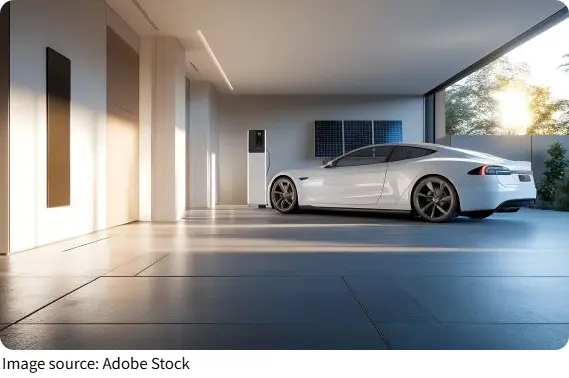
A New Layout Inside and Out
Without the same engine and transmission setup found in conventional vehicles, electric cars can offer a different kind of packaging. The Department of Energy explains that battery electric vehicles use a battery pack to store electricity and an electric motor to drive the wheels. Plug-in hybrid electric vehicles combine electricity with a gasoline engine, while hybrid electric vehicles use both fuel and electricity in different ways. For fully electric models, the simplified power system opens up room that can be used for passengers or storage. That can mean a more spacious cabin, a flatter floor, and a design that feels more open and flexible.
This layout freedom also affects the outside shape. Since cooling needs can differ from those of conventional vehicles, the front end does not always need the same large grille opening people are used to seeing. Designers can make smoother, more aerodynamic shapes that help improve efficiency. Every detail matters in an electric car, because reducing drag helps the vehicle get more range from the electricity stored in the battery.
Efficiency Shapes Every Detail
Electric vehicles are strongly influenced by efficiency goals, and that shows up everywhere in the design. The Department of Energy notes that all-electric vehicles produce no tailpipe emissions, and they can be charged from the electric grid. Because range is such an important concern for many drivers, automakers pay close attention to wheel design, body shape, weight, and airflow. Even small design choices can help stretch the distance a vehicle can travel before charging again.
The placement of major components also changes how the vehicle behaves. Electric motors can deliver power very quickly, so many electric cars feel smooth and responsive from the moment they start moving. That influences how designers think about balance, traction, and weight distribution. Instead of adapting an older layout, many companies are building vehicles around electric systems from the beginning, which leads to designs that feel more purpose-built.
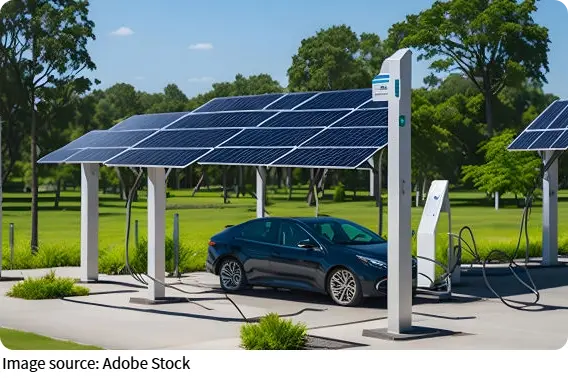
Charging Changes the User Experience
Electric vehicle design is not only about shape and structure. It also changes how drivers interact with their cars. The Department of Energy explains that electric vehicles can be charged at home or at public charging stations. That means designers think about where to place charging ports, how to make charging simple, and how to help drivers monitor battery status and range. Digital displays and energy-use information become a bigger part of the driving experience.
There are also different categories of electric vehicles, and design choices vary depending on the type. Battery electric vehicles rely entirely on electricity. Plug-in hybrid models include both a battery and a conventional engine, so their design must support both systems. Hybrid electric vehicles also combine technologies, though they are not typically plugged in to charge. These differences affect weight, interior space, and component placement, which is why not all electrified vehicles look or function the same way.
Electric cars are changing vehicle design in ways that go far beyond appearance. They are pushing automakers to rethink space, efficiency, performance, and daily convenience all at once. As more drivers become familiar with electric vehicles, it becomes easier to see that this is not just a new way to power a car. It is a whole new way to design one. If you have ever noticed how different many electric cars feel inside and out, that is not an accident. It is the result of a vehicle being reimagined from its very foundation.