Safe Steering Control

Ravish Kumar
| 17-04-2026
 · Automobile team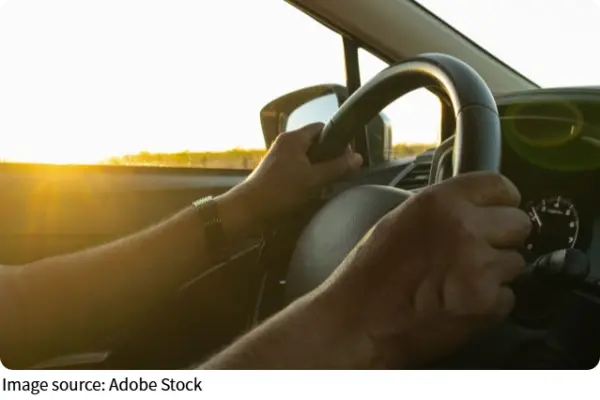
When we drive, steering control is one of the most essential skills that directly affects safety.
It is not only about turning the vehicle but also about maintaining stability, responding to unexpected road conditions, and keeping full control at all times.
Even experienced drivers can underestimate how much steering habits influence overall safety.
In daily driving, small actions such as hand placement or turning timing can make a major difference. That is why we focus on correct steering techniques and also discuss why one-hand driving can significantly reduce control. Building good habits helps us create safer journeys for everyone on the road.
The Correct Way to Hold the Steering Wheel
The safest and most recommended method for holding the steering wheel is the balanced two-hand position, often known as the "9 and 3 o'clock" method. We imagine the steering wheel as a clock face. The left hand stays at the 9 o'clock position, and the right hand stays at the 3 o'clock position.
This position gives us balanced control from both sides. When we turn the wheel, both hands work together smoothly, allowing controlled rotation in either direction. This range of motion is sufficient for most normal driving situations, including city roads, highways, and turning at intersections.
Another key advantage is control awareness. When we return the wheel to a straight position, it becomes easier to track how much we have turned. This reduces the chance of overcorrecting or losing alignment, especially in situations where quick adjustments are needed.

Safe Steering Techniques for Different Road Conditions
Different driving environments require different steering approaches. On uneven or rough surfaces, we use small and controlled steering adjustments. The goal is to keep the vehicle stable rather than making large or sudden movements. Combined with steady speed control, this helps maintain balance and comfort inside the vehicle.
On curved or winding roads, we rely on gradual steering input. Instead of turning sharply, we begin adjusting the wheel early and smoothly follow the shape of the road. This method reduces sudden side forces and helps maintain a steady path through the curve.
When aligning or positioning a vehicle, structured steering steps are important. We guide the vehicle into place with a controlled turn, make gradual corrections if needed, and straighten the wheels once the vehicle is properly aligned. This step-by-step approach helps maintain accuracy and reduces unnecessary movement.
Why One-Hand Driving Reduces Control
One-hand driving may appear relaxed, but it significantly reduces stability and reaction ability. In normal conditions, it may feel manageable, but road situations can change in seconds.
If the vehicle encounters a sudden obstacle or uneven surface, quick steering correction is required. With only one hand, it becomes harder to maintain balance and respond quickly. Even experienced drivers may find it difficult to recover control in such moments.
Another issue is delayed response. Safe driving often requires simultaneous actions such as steering adjustment and speed control. With both hands engaged, these actions become more stable and coordinated. With only one hand, reaction speed and precision decrease.
One-hand driving also increases overall risk in traffic environments where multiple vehicles are present. A small loss of control can quickly affect surrounding traffic, especially at higher speeds or in dense traffic conditions.
Building Safer Driving Habits
Safe driving is built on consistent habits rather than occasional attention. Keeping both hands on the steering wheel is one of the simplest yet most effective habits for improving control. It allows us to respond quickly, maintain balance, and reduce unnecessary risks.
We should also stay mindful of how steering habits affect long-term driving safety. Even small changes, such as improving hand position or avoiding single-hand control, can significantly improve driving stability.
Ultimately, safe driving is not only about personal skill but also about responsibility toward everyone sharing the road. When we maintain proper steering control, we contribute to a safer and more predictable driving environment.
Lykkers, have you ever observed your own steering habits during daily driving? Small improvements today can lead to much safer journeys in the future.